
Trikaal
Goodbye Benegal Sahib

[This piece was written on my much older blog in 2013 when I first watched Trikaal and marvelled at Benegal Sahib.]
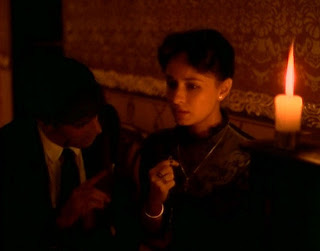
A warmth of candle-light pervades the hue of the entire length of Trikaal (1985). Many faces of early television soaps and advertisements are found here – Neena Gupta, Benjamin Gilani, Dilip Tahil, Sushma Prakash (of the Rasna ads). A young Lucky Ali, as expectant youth, about to sail to Lisbon to realize medical dreams. I have always wondered about Benegal’s canvas of the early Independence nation, princely states of southern and western India emerge in Nishant, Bhumika. The coalescing of old forms of rule into new scaffolds, recurs. A chowkidar, landlord, agrarian desperation are painted perhaps in deliberate exaggeration. The sway of power that is now relegated to the arena of historical, cultural – distanced from current loci of state power. But Trikaal is somewhere else. Time drips like candle-wax onto arm-chairs, pianos and eiderdowns of this haunted Portuguese-Goan ancestral house. Ernesto, the freshly dead husband and head-of-household is beseeched to return by Leela Naidu, the delirious and grieving widow, through the medium of the housemaid, Neena Gupta, Milagrenia. Milagrenia is like a vulnerable cow, squeezed at will, by passing men. An available cushion of feminine appeal. Especially for those that can’t have Anna (Sushma Prakash), the most beautiful girl in the village. Anna is in love with Leo, a virile socialist, hiding in the basement, faraar (fugitive). The freshly decolonized nation, cooperative movements, princely state-acquisitions, agrarian intrigues are left behind. And Anna emerges, along with the recurring ghost of the local (seemingly Hindu) betrayed by their ancestor to gain favor with the Portuguese. A feared past and untouchably sublime sexuality (futurity?) are two poles within which a present is situated. I am always charmed by the careful erasure of recognizable marks of the nation’s time in the film. Everything, except Bombay, Lisbon and Portugal are irrelevant. For it is the arc on which this anxious family ride. Who will win Anna? Colonials or socialists or petty ambitious Bombay?
Anna yields only to her revolutionary, hiding knight. It is a repetition of what liberal feminists have repeatedly decried about depiction of sexual agency in Indian films. A deliberate re-utterance of a much-told lore, I believe, beautiful girl yield hesitantly to the arms of a desiring man. The grand tale of patriarchy. But Anna knows there is delicate albatross of the ideal future that she carries. Sex is the domain on which the future is battled intimately. Politics is the domain on which it is battled crudely, for the sheer physical grasp of futures. All the while a springboard is kept handy to fall back on and recuperate, should the battle for futures not yield. Such a springboard is Milagrena the bovine-eyed, ghost-calling slut. History collects like candle-wax. And Benegal knows that well.
Goodbye Shyam Benegal Sahib.