
Sound Seva - III
What remains

I show up wherever I can hear the pekhawaj. Its deep, resounding bass tones are the reason for a skipped heartbeat. I have written before about it. The applying of dough on one side to get accurate tonality. Braj remains, in these last months that I have leave from university, a collection of traces of these sounds. I am increasingly less interested in the narrated version of people’s lives, as told by themselves or others. If you go and ask people, with a dictaphone in one hand, “Who are you?”, they are most probably giving you a mumbo jumbo response that they are trained to babble to keep the social and public worlds at bay. This endless babbling world fades out as the teenaged player starts making sound out of the pekhawaj slowly.
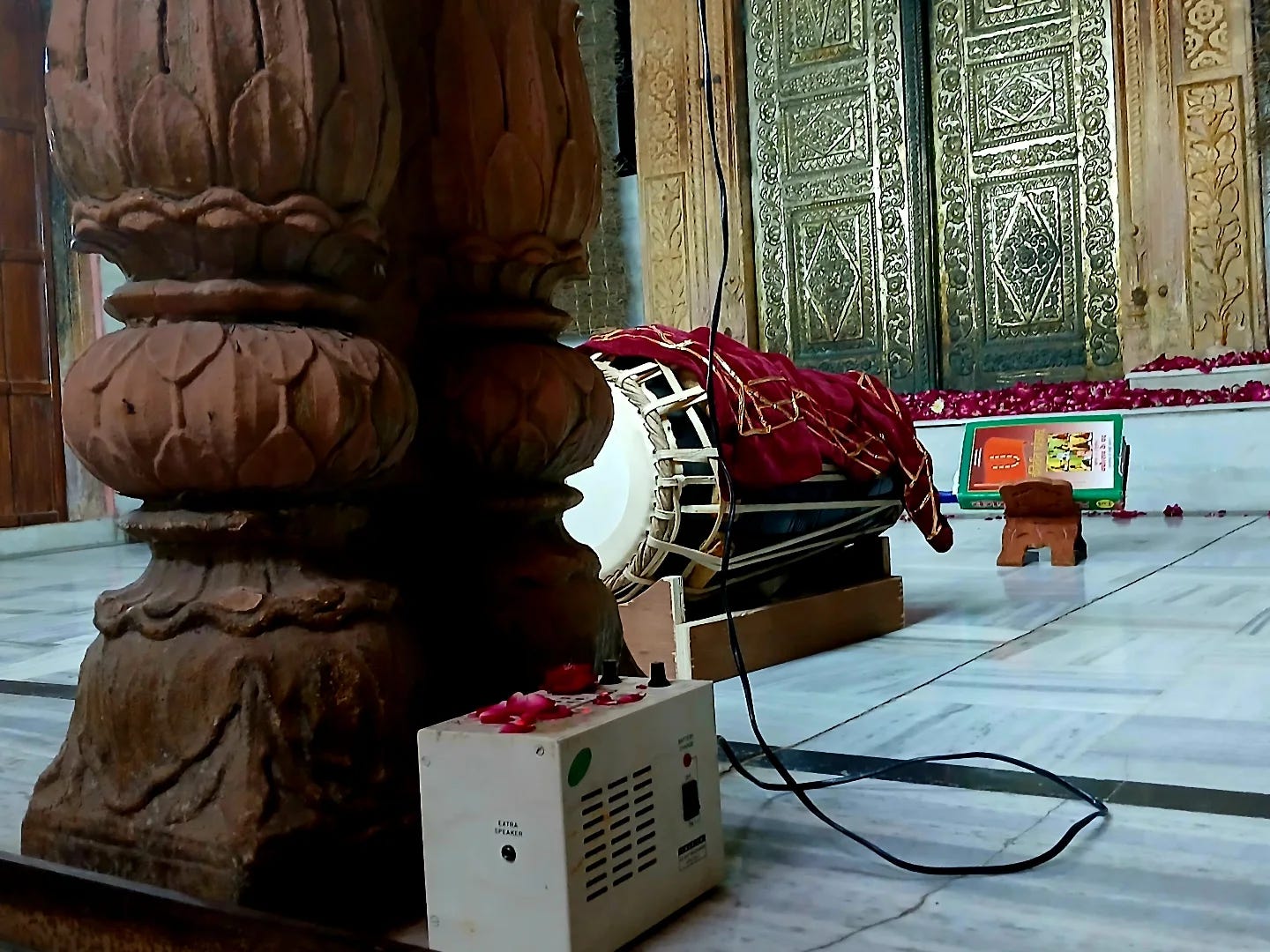
[Moments before the Raag Seva, Vrindavan. Copyright: Atreyee Majumder, 2025]
The priest was reading out from Srimadbhagvatam yesterday. A rapid, deft chanting style. I can’t read very fast, so am admiring of anyone who can read, register, and then vocally recite shlokas in quick succession in such a speed. It is summer now, there are less tourists on the streets. Business is a bit down for erickshaw drivers and sweetshops.
But the routine raag seva continues here in some temples. Unperturbed by the footfall of tourists or lack thereof. Unperturbed by the warlike muscle-flexing in the news cycle. Like flowers which bloom exactly on time, even in warzones. Like the sound of birds at spring that declare that winter is finally over. There are events that mark human history. A kind of additive logic of time: this happened, and that happened. Even in biography, the same: lunch, dinner; and then, lunch, dinner. But then there is cosmic time, geo-time that cares nothing about the tragedies that mark human history. Sun sets, planets move, galaxies disappear, flowers bloom, birds sing, tectonic plates shift, ocean tides swell. Similarly, the sounds of chanting and singing wedded with the bass sound of the pekhawaj occur in a minor temple almost saying, lift me out of human time.
What remains are the traces of movement.
[Enjoy Pandit Jasraj singing the Madhurashtakam here.]