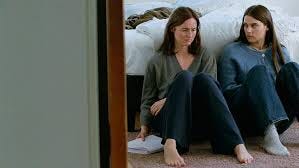
Sentimental Value

I am not writing to rave about the absolutely superb film Sentimental Value (Joachim Trier, 2025) which is currently on Mubi (India). Watch it (if you have the opportunity, in the theatre). I hope it wins all the awards that it is nominated for. Its texture reminds me of Lost in Translation (Sophia Coppola, 2003) but more pensive, with a Scandinavian refusal to be ever be loud or too direct. But my post today is not really a peaen unto this film. I want to note the performances by the underexpressive artists. Those who steadfastly refused expression. I am trying very hard to avoid spoilers here onward.
I had seen Todd Field’s 2022 masterpiece Tar in which Cate Blancett plays the German conducting mastero Lydia Tar. I rewatched it on a flight back to India thinking this time that Cate Blancett had brought a Hollywood type expressive regime to this very complex, brooding, dark German conductor’s life and the role based on the life. Blancett is perfect for the role but for the international audience. The lasting image (on the internet) of the film Tar shows Lydia Tar in the throes of musical and emotional highs waving asunder her conductor’s baton. Was Lydia Tar likely to have been as transparent in her artistic communication? Perhaps, no.
The Scandinavian or northern European refusal or obstinacy about too much showing of one’s inner world is not something, that Asia or America has much of a taste for. Asian and Hollywood heroines over-express with their beautiful, seductive faces. With this, I must come to the stellar performances of the two Norwegian female actors in Sentimental Value - Renate Reinsve (playing Nora) and Inga Lilleaas (playing her younger sister, Agnes). I was less interested in the otehrwise stellar performance by Stellan Skarsgard (playing their father, Gustav Borg). The two sisters remind me of Liv Ullmann (from Bergman’s 1978 film Autumn Sonata). These northern European women pull a kind of radical Ikea simplicity upon the ornate, artisanal seduction of women in South Asian cinema or Hollywood. Their un-seductive faces convey nothing, and in that nothing, there is inordinate mystery - pain, desire, rage, love - the whole series. Their faces (perhaps, wilfully) don’t give the audience any cue as to the appropriate emotional alert button that should be hit at various points in the performance. It’s possible that the intended emotion behind the (non)expression is one of love, but a member of the audience wants to interpret it as alientation or ambivalence. If that happens, then that latent freedom and opportunity are available to the audience.
I watched these two beautiful female actors (in the role of two intimately connected sisters) in amazement. They were just like Bergman’s heroines. They looked at each other, their complicated parents, their loving childhood home, their passing loves and partners, and the little boy Erik (Agnes’s son of eight) conveying, at all times, almost the same temperature of emotion. But they were never boring even for a moment. Their expressions are akin to an off-white jamdani sari whose intricacies only show up to the seasoned eye, and in the correct form of light. Otherwise, you will only see white cloth.
They don’t tell you in advance what to make of them. They are un-obviously beautiful. They generate immeasurable mystery with their refusal to express any one obvious, singular emotion at any given point. They mess with your head initiating a most enjoyable slow-burn.