
Sculpting in Time

We read excerpts from Andrei Tarkovsky’s meditation on cinema - Sculpting in Time (1985) last night, at the university reading group. We asked, in our chitchat, whether modern art is an attempt to rise above aesthetic pleasure-seeking as an attitude to art, and confront the very grotesque nature of reality. What then does cinema do to our attentive faculties, we wondered.
Cinema draws out the event at the level of a fraction of a second, I waxed (albeit indulgently). If two people were reaching out and catching each other’s hands while chasing a moving train, our perceptive capacity would not register the precise moment. It is cinema that makes this possible. I am thinking, obviously, of the famous train scene in the SRK-Kajol starrer DDLJ. If Mizoguchi had shot it, perhaps, that scene would last ten minutes. If Wong Kar Wai had shot it, it would serenade to some kind of ominous, slow soundtrack, and the colour scheme would change even as we watch the hands come closer to each other. If Ray had shot it, the bumpiness of the crowded station would not be lost despite the smoothening of the moment of meeting of lovers.
To draw out the fraction of a second, is to stretch the limits of human attention. It is like Georgia O’Keefe’s attention on the inside of flowers. We register the beauty of flowers ever so briefly, and move on to write poems about it. What will it do to our consciousness to relate to the interiority (quite literally) of a single flower? And then, then there is the full attention of Pablo Picasso. To the radical, stark reality of things. A woman reclining on a chair, implodes into a universe of possible interiorities. The fault lines of the galaxies within her start to show. The chair blends with the being of the woman, in an uncomfortable, awkward way. Picasso never shies away from confronting the radical alterity of the awkward, uncomfortable moment, whose emotions are not legible in standard formate lexicon.
Cinema shows the fault lines of time’s passage in making the elements of motion legible. Perhaps, Picasso created a kind of still-form cinema.
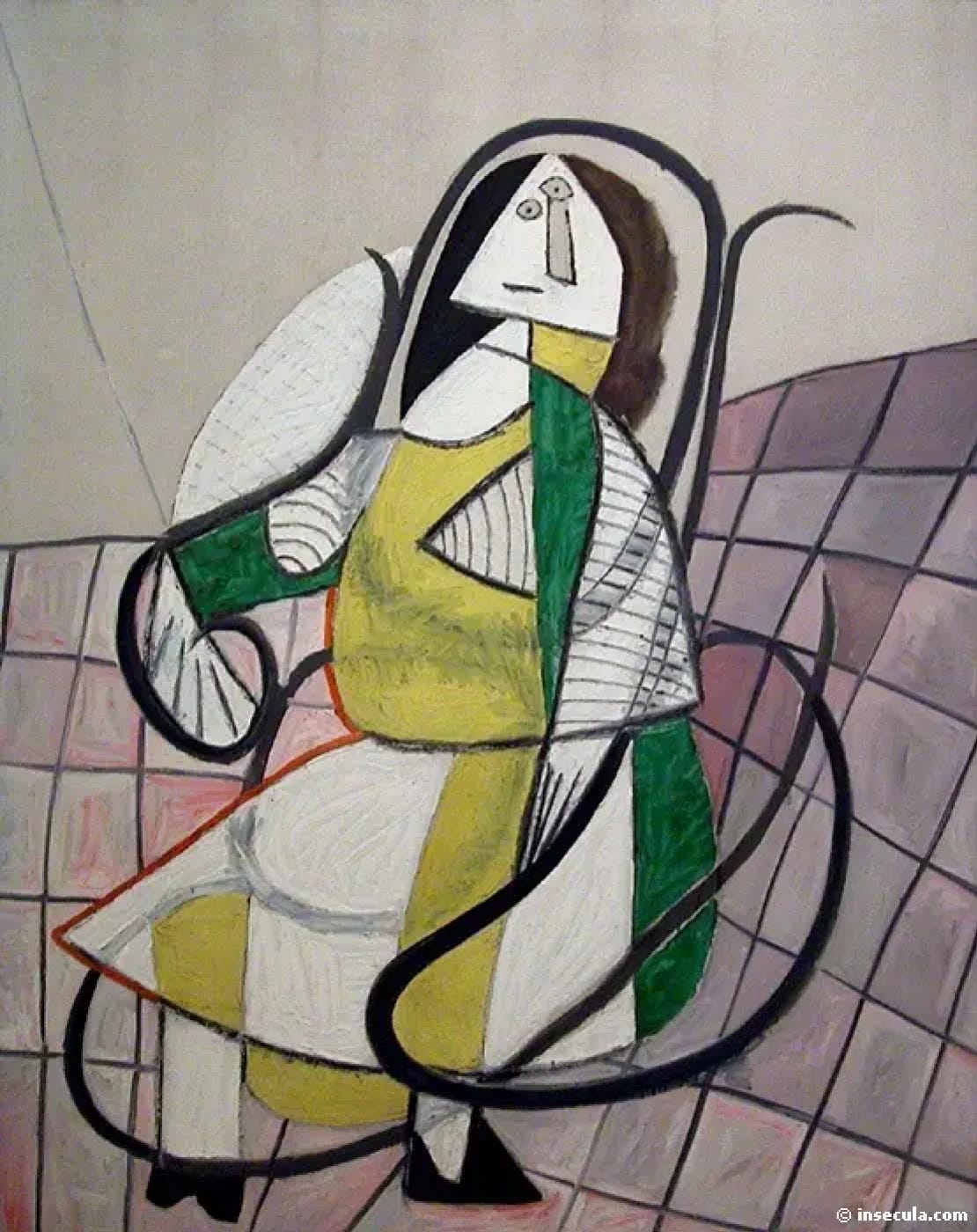
[Picasso. Jacqueline in a Rocking Chair (1943). Source: ArtHive.]