
Old Words

In 2012, I wrote a walking essay, that turned into one of my first (frivolous yet serious) publications from my doctoral research in urban-industrial regions of lower Bengal. It came out in the Sarai Reader 09: Projections. I remain grateful to the editors who believed in this whimsical piece of writing.
It was a reckless attempt to copy Benjamin’s Arcades style of writing. It had numbered aphoristic observations. A constellation of prose nuggets, that I hoped would sum up as an argument. The argument was Benjaminian of course, WB’s The Arcades Project read with Susan Buck-Morss’s The Dialectics of Seeing (1989). The broken-ness of totality started becoming clear to me in seeing this ruinous geography of the “fieldsite”, as measured in walking. I was keen on being the glamorous flaneur, but not in the metropolis amid glass ceilings which gave the illusion of freedom, but through the ruinous evidence of the flight of capital. Obsolescence was the obvious description of this region and its socioeconomic life, but there was a feverish outcry in the material environment and human vocabulary that said: no, we refuse this categorisation, we are relevant still, we are, we are.
I quote from the whimsical essay here, as I happened to re-read it last night in a fit of sadness:
1.3. You weave dreamworlds and catastrophe out of big-city rejects. Reject cell-phones, footwear, football jerseys, tie-up bras, sunglasses, CDs. Counterfeit doesn’t quite catch it. A mofussil version of commodity this. A creature of limited resource, fantastic urge and images floating your way across the evening river. These commodities adorn adolescent breasts filled with hopeful sexuality. The morning athelete carries around a leaping jaguar on his thighs. Cell-phones are repaired with new batteries and new keypads. Carefully blanketed in plastic covers. Maruti vans are repainted. With a message for Champa at the back. Champa wears a shiny butterfly on the butt of her jeans. She smiles coyly and expects you to get the message. If you don’t, she conveys her indignation in SMS short-form in the dead of the night. You would not want her wait too long at the bus-stop next to the B-grade movie hall. Next to a blown-up photo of big breasts and an angry man. Probably called Sunehri Raat. Or something in Bhojpuri. It would ruin your nightly fantasy if she stood there too long. Her innocence corrupted in the evil company of murky sexuality. But you’d like her to waver in the dark alley sometimes. Retaining guilt and shame, of course. Or else your nightly fantasy would be ruined. It’s the only thing this nightly fantasy. It keeps you going as you hang out of the trekker, jump across heaps of garbage, brave the kicks in your gut, fall asleep in your sweaty armpit, expect the next dot to appear soon after you join the first two.
This aphoristic essay and its 2025 re-reading made a case for a past (obsolete?) version of my writing self. A torn, cut-up, desperately alive version that didn’t take its audience for granted. I had no idea that it would be published ever, so I wrote like I was dancing alone in the town square. The old words seem a tad bit tacky, and embarrassingly, desperately alive, in a way that I am not anymore.
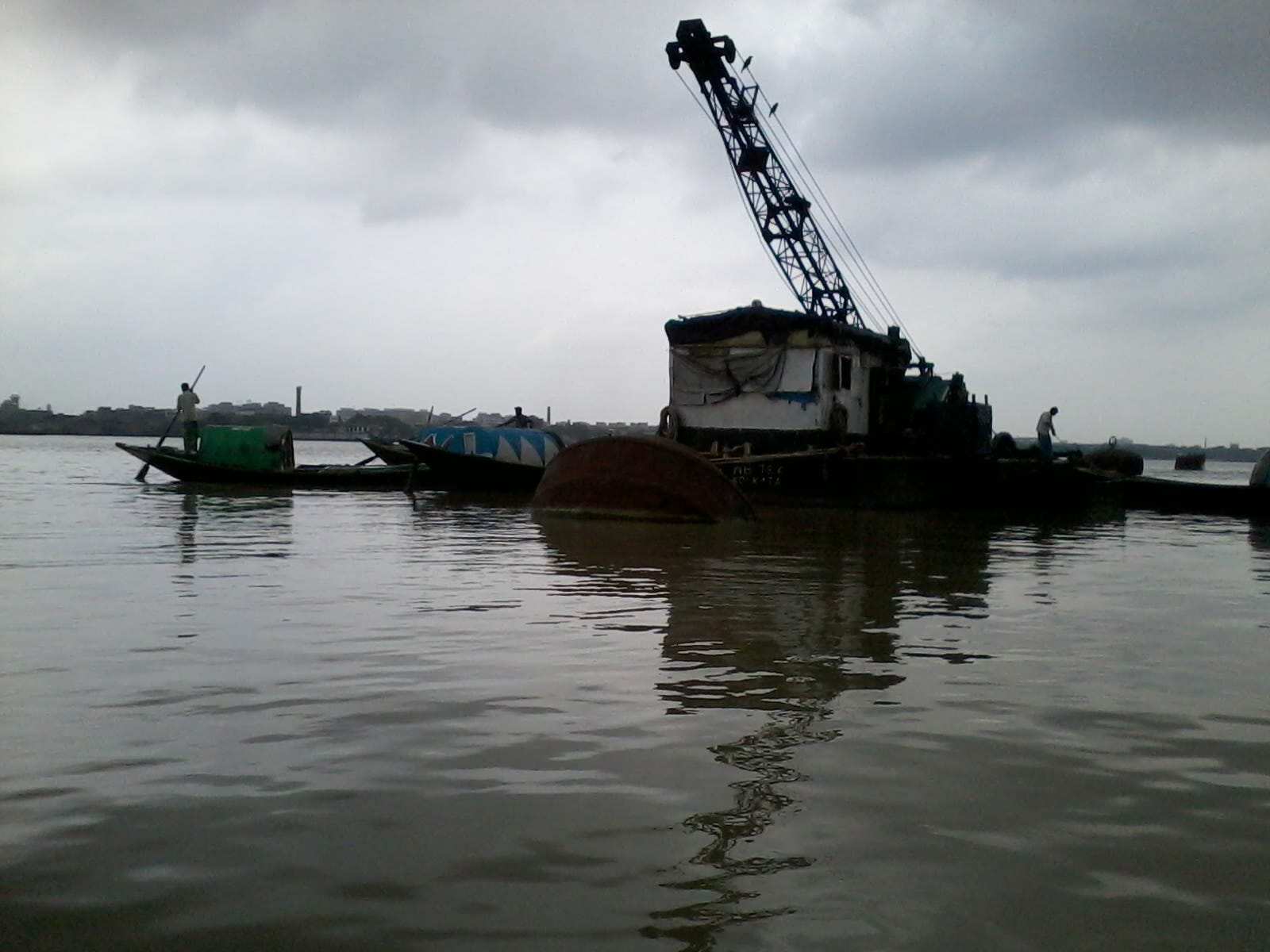
[The riverine life of the Hooghly, 2011. Copyright: Atreyee Majumder.]