
Heat and Dust

Summer is raging all over India, especially north and central India. I am reminded of the early scenes of the Merchant-Ivory film, Heat and Dust (1983) that was based on Ruth Prawer Jhabvala’s novel by the same title. Julie Christie played the role of a hippie type, young, Caucasian woman who comes to India to uncover the story of her great-aunt, the wife of a British official who was involved with a Nawab (played, of course, by Shashi Kapoor). In her initial days, she stays with a family in a lower middle class neighbourhood of Delhi, and it is summer. The texture of the film heightens the impact of the north Indian summer on this foreigner woman. The colours are blinding, the contrasts are striking. The scorching sun diminutes human disagreement. Heat, especially fire, is a nourishing life-force. And yet the Indian summer subdues an entire population into meek submission.
I wasn’t exactly aware of this phenomenon until I found myself in the middle of this year’s north Indian summer, roaming around in confusion. The quality of sociality had changed. Suddenly the range of expressions on people’s faces seemed to have changed. They were more tolerant of each other. There was less shouting and energetic confrontation in the public sphere. There was a feeling of collectively shared suffering. There was even a quiet solidarity. It was perhaps the solidarity of shared history - that being, the shared history of climate.
I return from a couple of days in the rural areas of western India. The countryside looks bleak. I ask a car-driver there if 43 or thereabouts was the highest point that the summer temperature range would hit. He says: “don’t even ask, this is the way our land is. This is our collective suffering.” Yahaan ki yeh hi takleef. I say to him my friends in Bangalore complain when the scale reaches 35 Celsius. He laughs softly, feeling perhaps, a bit sorry for Bangaloreans who have less endurance for suffering, who don’t have a shared history of climate-suffering. There are earthen pots of water everywhere for passers by. Everyone has cloths covering heads and faces in order to avoid being burnt, or getting a heatstroke. But the rains, he goes on to say, are the biggest enemy. They come unannounced and cause heavy damage to the harvest. There are various crops in the area - cotton, vegetables, millets. But not enough rain or sometimes too much rain. Farmers constantly risk losing life’s work and earnings.
In the midst of this, I play Vivaldi’s Winter to a bunch of school kids. And a range of other strange sounds. But they are hooked to Vivaldi. They want it to be played repeatedly. Especially the ending where the tempo picks up suddenly and the notes hit high. There fingers and toes start to twitch as they pick up the rhythm. Vivaldi’s spirit is recreated on a matted floor in a classroom where there the cooler is shut off so they can hear me speak. Outside at noon, it is 43 Celsius.
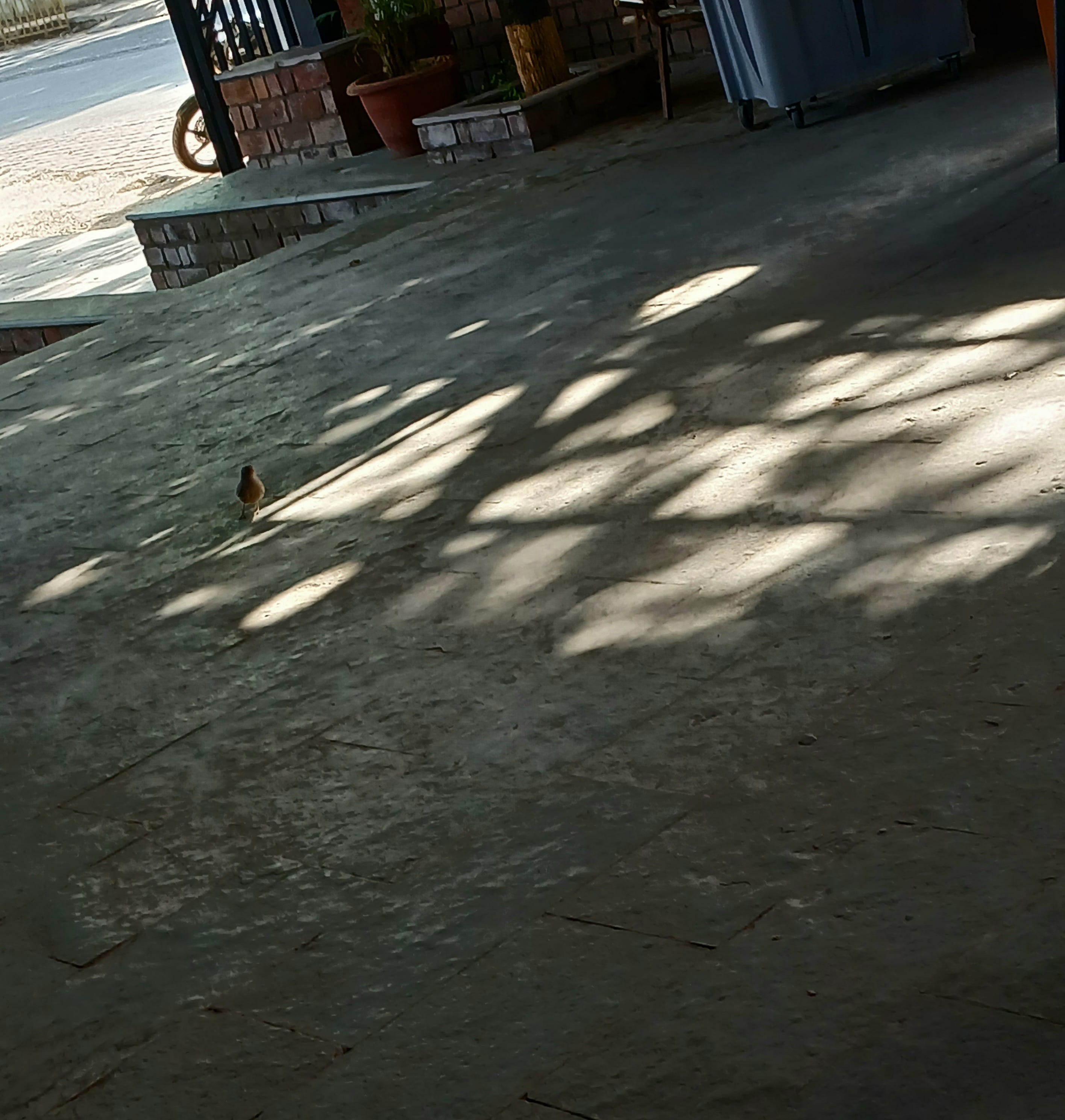
[Summer tackling. Mahrashtra, 2025. Copyright: Atreyee Majumder.]