
Desperation

We desperately try to love, and we fail. First, our fathers and mothers, then our sisters and brothers. Then our broken toys and unfulfilled wishes of birthday parties. Then our first loves. Then our poor imaginations of every friend, boyfriend/girlfriend, husband/wife, neighbour, colleague, boss that fails to meet our particular catalogue of expectation. And life progresses thus. Beginning, mind you, with a desperation of/for love.
The world has gone back to a childhood-reminder version of itself. A warped version of the Cold War is back. Iran, whose interior developments and the mysterium surrounding it, would worry the the BBC and CNN in the 80s. This feels comfortable, like being back in the mother’s womb. Almost like the telly version of world news being belted out at 9pm. Iran seems like an old carpet or a household object that we had put away when we got new age furniture. To see Iran on the news and back haunting our dreamsworlds, feels familiar, in a world where my age makes me feel uncomfortable with dominant forms of interpretation everywhere. Iran, Kuwait, Iraq, Kurds (to add a dash of Bosnia) immediately takes me back to telly news and heated masculine conversation everywhere.
When did we Indians become so insular? I find less and less Indian discourse concerns political or other developments in other parts of the world these days. This is the same India that turned away US tankers during the Iraq war, and took to the streets for anti-Vietnam protests. The India of Mrinal Sen and Ritvik Ghatak and the Emergency and the Indo-Bangladesh war. The India that wore shell-framed glasses, bell bottom pants, watched Zeenat Aman sway on the screen, the India that knew the voice of Fairouz, and was comfortable (not sallivating) about any slice of assurance of being relevant in the global scene. The India of the Fiat-and-Ambassador 1980s. The India that we failed to love. Much like the primary love for family that is the inevitable failed promise. So then, once that love project fails, we go about the world trying to find a world for ourselves within the logics of capital.
I watched, in the middle of war hysteria and Iran-fandom, Jim Jarmusch’s 2026 film Father Mother Sister Brother - an anthology of three connected films about the desperation of familial love (spoiler alert). Tom Waits acts as a dubious, lying, failed father in the first film based in New Jersey. The snow-laden east coast highway is beautifully shot. Tom Waits hits it out of the park. Adam Driver and Mayim Bialik (who you will remember from The Big Bang Theory) do admirable jobs as discomfited, guilt-ridden, stupefied adult children. The second film, based in Dublin, is my favourite. A desperately alone, anxious, successful, type-A mother whose impeccable house with a cottage piano and perfectly laid out tables, are a comment on the fact that her daughters who live in the same city meet her once a year for afternoon tea. The two failure-daughters don’t even try to pretend with her. Cate Blancett deos a stellar job of a stiff, Irish, single, turtleneck-wearing officewoman. There are awkward silences, absolute breakdowns of conversations, predictable rivalries between the sisters about life-job-relationship success-failure scores. The mother looks on in complete disappointment. The third film about brother-sister twins who go back to their parents’ empty Paris apartment after their parents’ sudden death in an aircarash. It seems like the only story of a version of an authentic familial bond. The twins are indeed close to each other, and authentic in their parent-mourning. It makes Paris streets and cafes look inviting, but sort of falls flat on its face. I liked it the least, and also, did I sense a weird sexual chamistery between the twins? Is it what they call a ‘twin factor’? It’s too new age for my liking.
The failed attempts at loving at the root of all trouble, I maintain. But the return of the sensation of those failed theatres of love make an early childhood, familiar desperation return to our scattered, internet-wired mental landscapes. I remember the bad Hollywood ‘Iran in 1979’ film from 2012 - Argo - with Ben Affleck in it. It assures me again that the 2012 world got nothing about the 1980s. That turmoil was a regular, familiar, assuring reality on the streets of Calcutta where cadres of CPIM and Congress were regularly killing, fighting, using crime to meet their political needs, and a generalised slow-burn war was always afoot. I don’t remember the 1984 riots in Delhi very well, but I remember clearly trying to memorise the word Sriperumbudur, (the town where Rajiv Gandhi was killed by an LTTE suicide bomber). I remember trying to memorise the full form of LTTE - Liberation Tigers Tamil Eelam. Marvelling at Outlook and Frontline print covers with images of splintered bodies from the war in Sri Lanka, or Bosnia, or Kuwait, or Libya, or Kashmir. I remember concluding as an eight or nine-year-old that the world was a sum total of various capital cities which were bombed regions because of various other capital cities. I had to memorise all their names, in hollow bids at being a clever girl of eight. And carefully pronouncing the Soviet words of transition - Glasnost and Perestroika. Also, their names Gorbachev, Yeltsin, Nadia Commaneci (of the Olympic gymanstics perfect 10 fame). The Labour Prime Minister, John Major, if I remember correctly, visited Calcutta in the late 80s.
A kind of desperation has fallen on me today, since the day of seeing Iran all over my Twitterfeed. It feels as if a version of the familiar failures of my childhood are back.
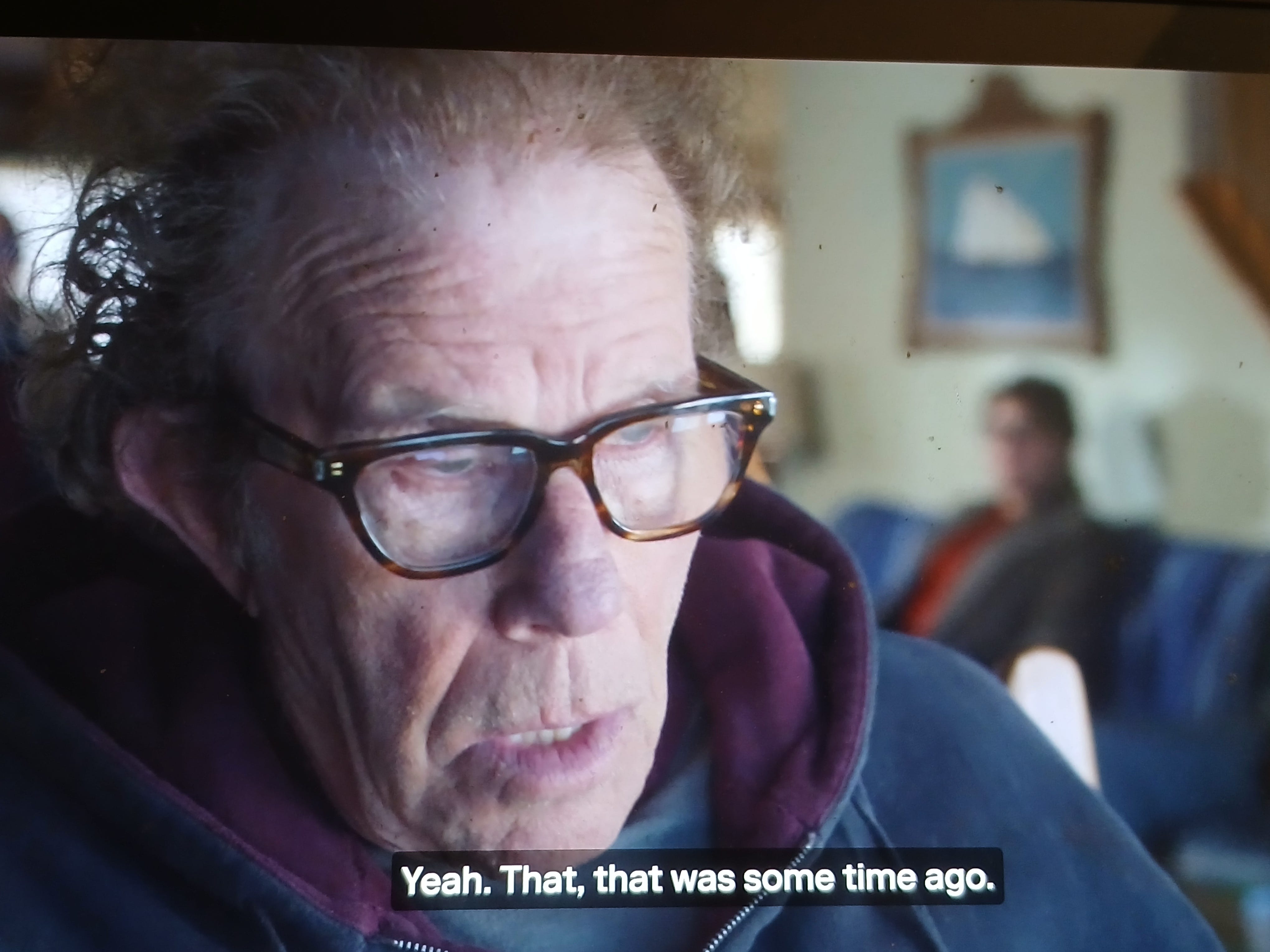
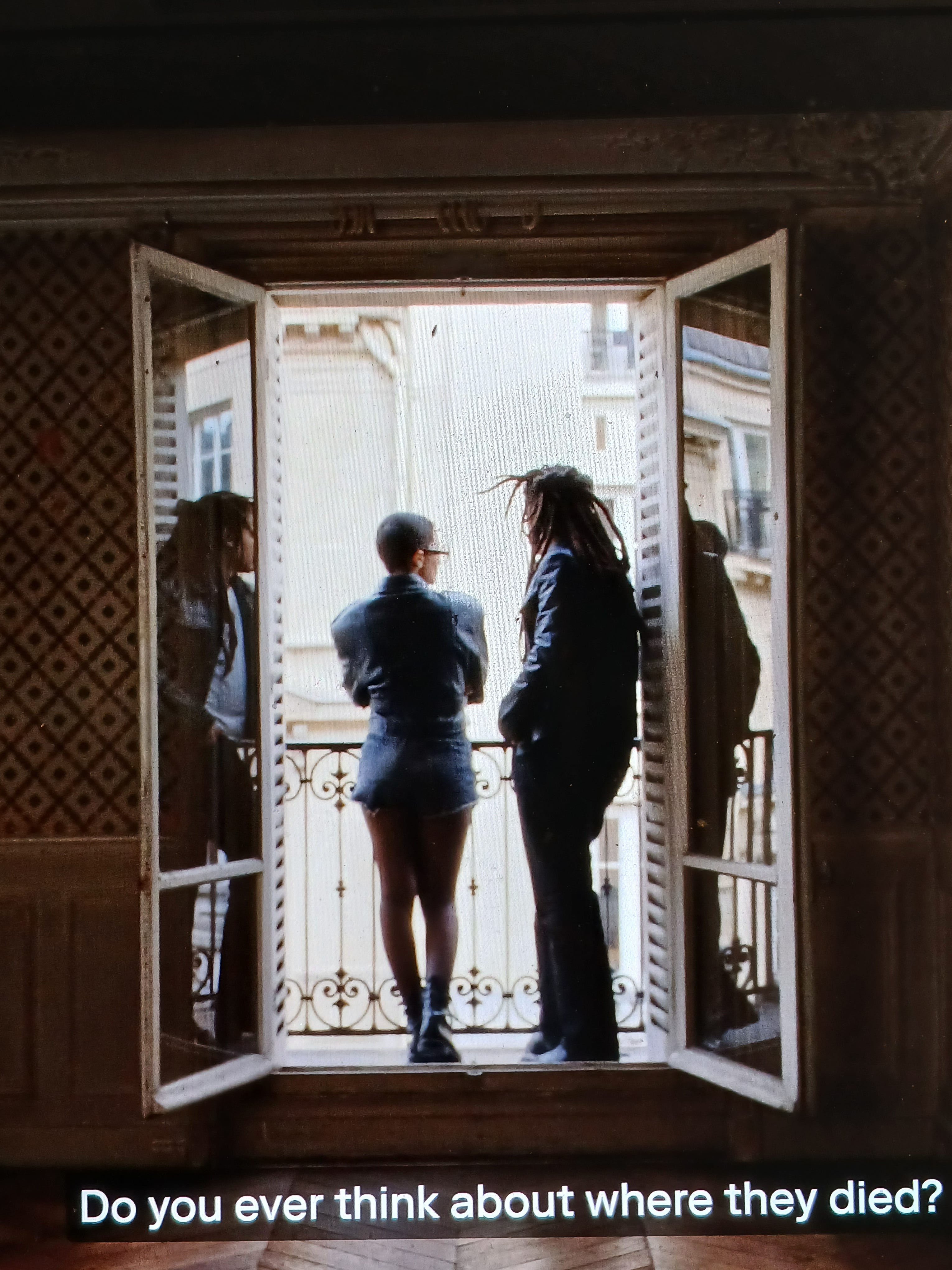
[Screengrabs from Father Mother Sister Brother (played on Mubi).]